

In short: How to price furniture when selling a house: price it separately from the home using current resale value, not original cost. Start at 20% to 50% of retail for most used items, higher for antiques or premium pieces with documentation.
Compare local marketplace listings, note condition, and use a written bill of sale.
How To Price Furniture When Selling A House is a resale-value exercise: used furniture often sells for far less than retail, with AptDeco reporting typical resale pricing at 20%–50% of original price depending on brand, age, and condition.
The trade-off is speed versus recovery.
Leaving furniture may help buyers visualize rooms, but the National Association of Realtors’ 2023 Profile of Home Staging says 20% of buyers’ agents reported staging increased dollar value by 1%–5%.
Price too high, and the buyer may ask for removal or a seller credit.

Decide whether furniture helps the sale
Furniture can help a home show better, but it does not automatically raise the net proceeds.
The practical question is whether the pieces improve marketing enough to offset slower negotiations, appraisal risk, tax questions, or a lower clean-sale price.
Data supports a measured approach. The National Association of Realtors reported in its 2023 Profile of Home Staging that 81% of buyers’ agents said staging made it easier for buyers to visualize a property as a future home.
The same NAR report found 20% of sellers’ agents said staging increased the dollar value offered by 1% to 5%, while 27% said they saw no effect on value. That split matters. Furniture may help presentation, but the payoff is not guaranteed.
| Measure | Figure | Source |
| Buyers’ agents saying staging helps buyers visualize the home | 81% | National Association of Realtors, 2023 Profile of Home Staging |
| Sellers’ agents reporting a 1% to 5% increase in offer value from staging | 20% | National Association of Realtors, 2023 Profile of Home Staging |
| Sellers’ agents reporting no effect on value from staging | 27% | National Association of Realtors, 2023 Profile of Home Staging |
| Median staging service cost reported by agents | $600 | National Association of Realtors, 2023 Profile of Home Staging |
That cost benchmark is useful. NAR said the median amount sellers’ agents reported spending on staging services was $600 in 2023.
If the furniture being left behind is worth materially more than that, bundling it into the home price may be less efficient than staging selectively and selling the pieces separately.
There is also a downside case. Fannie Mae’s Selling Guide requires appraisers to exclude personal property from real property value.
If a contract blurs the line between the home and expensive furnishings, financing or appraisal questions can follow. Check the purchase contract and lender requirements before assigning a furniture price.
Tax treatment can differ too. The IRS treats gain on the sale of a main home under home-sale rules, but furniture is personal property and generally does not get that same exclusion treatment.
Readers should confirm tax treatment with IRS guidance or a tax professional before allocating large dollar amounts.
- Leave furniture only if it clearly improves marketability and the buyer actually wants it.
- Price the furniture separately in the contract when possible, because lenders and appraisers treat personal property differently.
- Compare the likely furniture concession with the NAR median staging cost of $600 before assuming inclusion adds net value.
- Use caution: acting on staging or tax assumptions alone can reduce proceeds or create closing problems.

Price used furniture from resale data
Price furniture from completed sales, not optimistic listings. The IRS defines fair market value as the price property would sell for between a willing buyer and seller, with both having reasonable knowledge of the facts, in Publication 561.
Action: pull sold comparables from marketplaces that show completed transactions, then adjust for condition, brand, age, and pickup logistics.
Reason: a buyer for a house package may discount heavily if removal, stairs, or timing make the deal harder.
Start with recent sold items on eBay, because sold listings show what buyers actually paid. Match the item type, brand, material, size, and condition.
A Room & Board walnut dresser and a flat-pack laminate dresser are not interchangeable comps.
Use local data where possible.
Large furniture often sells for less locally than nationally because buyers must arrange pickup. eBay’s fee schedule also matters: if a national comp sold online, the seller may have absorbed fees that a local cash buyer will not.
| Marketplace | Relevant pricing fact | Source |
| eBay | Final value fee for most categories is 13.25% on the total amount up to $7,500 per item, 2.35% on the portion over $7,500, plus $0.30 per order. | eBay seller fees |
| Facebook Marketplace | No selling fee for local checkout. For shipped orders, the selling fee is 10% of the sale price or a minimum of $0.80 per listing. | Meta Facebook Marketplace seller information |
| Chairish | Seller commission starts at 20% for standard sellers. | Chairish seller policy |
Those fees help explain why an online sold comp may not equal a bundled home-sale price. If a comparable chair sold for $500 on a platform charging 20%, the seller’s gross-to-net difference is material before storage, delivery, or pickup costs.
Use a narrow range, not one exact number. Take three to five recent sold comps, remove obvious outliers, and price near the low end if the furniture must stay with the house on a tight closing schedule.
- Price higher for documented designer brands, solid wood, recent upholstery, and matching sets.
- Price lower for smoke or pet odor, stains, veneer damage, missing hardware, or bulky pieces that are hard to move.
- Disclose if the furniture is included in the real estate contract or sold separately, because tax, financing, and appraisal treatment can differ.
Caution: do not rely on resale data alone for antiques, signed designer pieces, or estate items. A certified appraiser or specialist may be necessary, because mispricing can cost far more than any quick-sale discount.
Value built-ins and custom pieces separately
Treat built-ins and movable furniture as two different assets. Built-ins can affect the home’s marketability because they stay with the property, while freestanding custom pieces usually need a separate bill of sale and separate pricing.
This distinction matters because buyers, appraisers, lenders, and insurers do not usually value them the same way. Price them separately, document them separately, and state clearly what is included before a buyer writes an offer.
For the house price, start with items that are permanently attached.
Fannie Mae’s Selling Guide defines real property as the land and “improvements” and notes that fixtures are part of the real estate; personal property is not included in the appraisal of real property.
That means built-in shelving, wall-fastened media units, and custom closets may support the home sale, while a custom sofa or dining set usually does not.
Replacement cost can help frame a ceiling, not a selling price. Angi reported in 2024 that built-in bookcases cost $1,275 to $4,484 on average, with a national average of $2,876.
Angi also reported custom closets cost about $2,067 to $6,343, with a national average of $4,152.
| Item | Real figure | Source | What it means for pricing |
| Built-in bookcases | $1,275 to $4,484; average $2,876 | Angi, 2024 | Use as replacement-cost context for attached millwork, not automatic resale value. |
| Custom closet | $2,067 to $6,343; average $4,152 | Angi, 2024 | Can support the home’s appeal because it is typically attached and stays. |
| Home staging impact | 20% of buyers’ agents said staging the living room increased offers by 1% to 5% | National Association of Realtors, 2023 Profile of Home Staging | Furniture can help presentation, but that does not mean the furniture itself is worth 1% to 5% of the sale price. |
| Time on market | 48% of sellers’ agents said staging decreased time on market | National Association of Realtors, 2023 Profile of Home Staging | Leaving selected pieces may help the house sell faster even if the pieces are sold cheaply or not sold at all. |
The trade-off is simple. Bundling movable custom furniture into the house price can complicate appraisal and financing, because lenders underwrite the real estate, not the sofa.
Separating the price can make the contract cleaner and reduce disputes at closing.
The downside case matters. Buyers often assign little value to highly specific pieces that fit only one room or one taste. A seller can spend thousands to build a custom piece, then recover far less in a private sale.
Do not assume build cost equals market value.
- List attached items in the purchase contract as included fixtures.
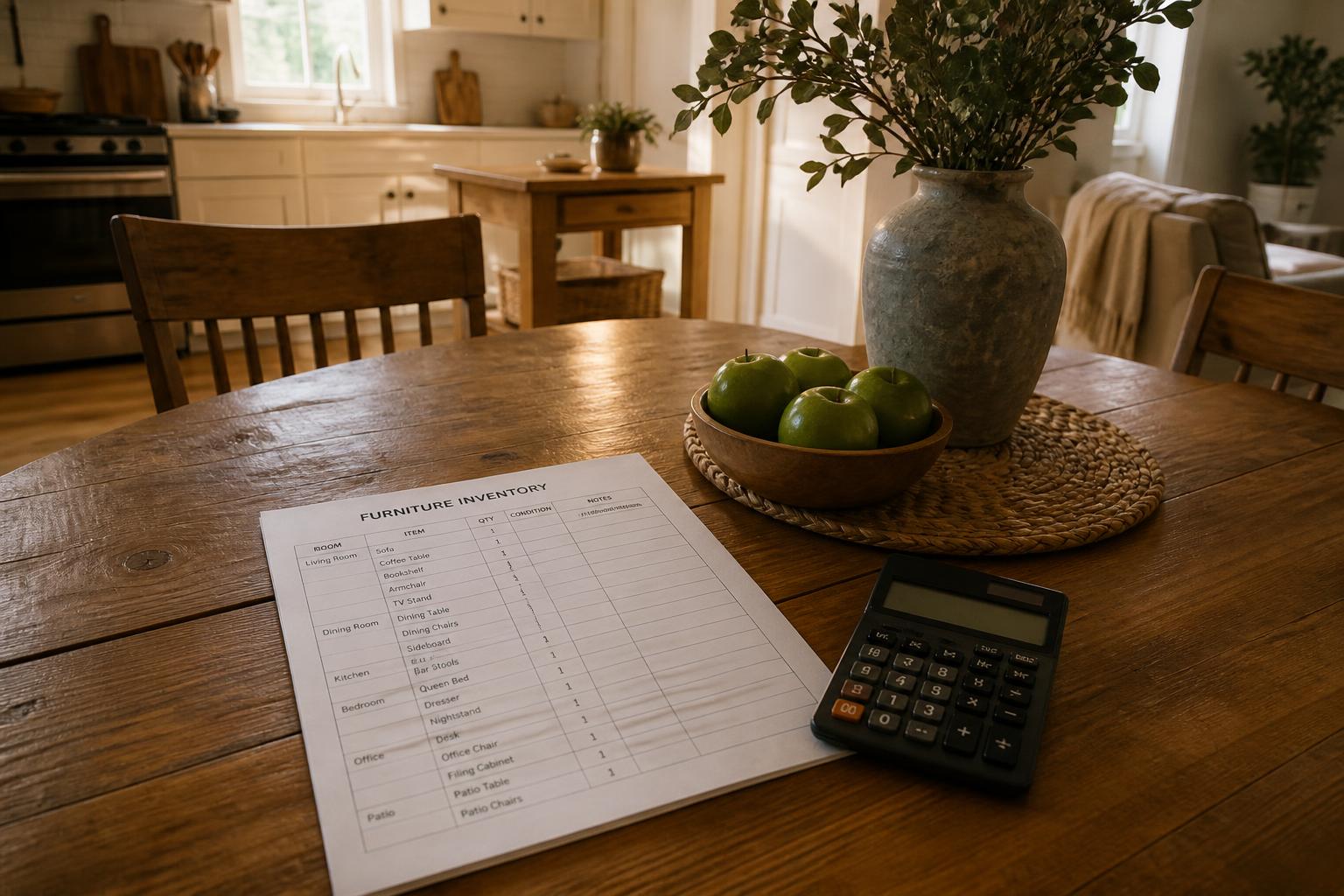
- List movable furniture on a separate inventory with separate prices.
- Keep invoices, dimensions, and photos to support value discussions.
- Check state contract forms and ask a licensed real-estate agent or attorney if fixture rules are unclear.
Caution: do not raise the home price by the full replacement cost of custom furniture without checking local comps and contract rules. Overpricing can reduce buyer interest, create appraisal gaps, and delay closing.

Negotiate furniture outside the purchase contract
Furniture is personal property, not real estate. Keeping it outside the home purchase contract can reduce appraisal and underwriting friction, because many mortgage rules focus on valuing the house itself, not movable items.
The trade-off is protection. A separate furniture deal can be cleaner for the loan file, but it may give both sides fewer closing-related remedies if the couch, dining set, or appliances are disputed later.
Fannie Mae’s Selling Guide says the value of non-realty items must not be included in the market value of the real property. It also says appraisers must analyze contracts that include personal property and make appropriate adjustments.
Source: Fannie Mae Selling Guide B4-1.3-05.
That matters because buyers often finance based on the appraised value of the home.
If the contract price quietly includes $5,000 or $10,000 of furniture, the lender may treat that amount differently from the house price, which can affect loan-to-value calculations and cash needed at closing.
| Rule | Figure | Source | Why it matters for furniture |
| Fannie Mae seller concession cap, primary residence, LTV above 90% | 3% | Fannie Mae Selling Guide B3-4.1-02 | Extra value packed into the contract can complicate concession limits and underwriting. |
| Fannie Mae seller concession cap, primary residence, LTV 75.01% to 90% | 6% | Fannie Mae Selling Guide B3-4.1-02 | Higher caps still do not convert furniture into real property value. |
| FHA interested party contribution cap | 6% | HUD Single Family Housing Policy Handbook 4000.1 | Loan rules limit how much value can be layered into a financed transaction. |
A separate bill of sale can solve part of this. It lets the home contract stay focused on fixtures and real property, while the furniture price, item list, and condition stay in a side agreement.
The downside is enforcement. If the furniture payment is outside closing, a buyer may have to pursue an ordinary contract claim instead of using real-estate contract remedies.
State contract law differs, so readers should verify the rules with a licensed real-estate attorney or agent in their state.
- List each item precisely, including brand, model, and condition.
- State the exact dollar amount for the furniture in a separate bill of sale.
- Confirm the lender allows the arrangement before signing.
- Keep receipts and photos, because post-closing disputes are common and facts matter.
Caution: do not move furniture pricing outside the contract to hide value from the lender. Misstating purchase terms can create financing, legal, and fraud risks. Check lender instructions and closing documents before acting.

Account for taxes, loans, and appraisals
Furniture can change the economics of a home sale, but it should not be priced as if it were part of the house. Taxes, mortgage rules, and appraisals often treat furniture as personal property, not real estate.
That difference can affect what a buyer can finance and what a seller may owe.
At the federal level, the main-home capital gain exclusion applies to the sale of a principal residence if IRS ownership and use tests are met.
IRS Publication 523 states the maximum exclusion is up to $250,000 for single filers and up to $500,000 for certain married couples filing jointly.
| Tax rule | Amount | Source |
| Main-home gain exclusion for a qualifying single filer | $250,000 | IRS Publication 523, Selling Your Home |
| Main-home gain exclusion for certain qualifying married couples filing jointly | $500,000 | IRS Publication 523, Selling Your Home |
That exclusion does not automatically make furniture tax-free. IRS Publication 544 says gain from selling personal-use property can be taxable, while a loss on personal-use property is not deductible.
If a contract bundles furniture into the price, a seller may need a reasonable allocation between real property and personal property for tax records.
There is also a financing issue. Fannie Mae’s Selling Guide says personal property and non-realty items must not be included in the appraised value of the property.
Freddie Mac’s Seller/Servicer Guide similarly treats personal property as not contributing to market value for mortgage collateral.
That means a buyer usually cannot rely on a standard mortgage to finance an inflated price caused by expensive furnishings. If the contract overstates the house price to cover furniture, the appraisal can come in low.
A low appraisal may force renegotiation, a larger cash down payment, or a failed deal.
Separate documentation often helps. A bill of sale for furniture can clarify what is real estate and what is personal property.
State transfer-tax forms, title documents, and lender disclosures may also require that split, but rules vary by state and county.
- Check the purchase contract and loan terms before assigning a furniture price.
- Ask a tax professional how to allocate value if furniture is sold with the home.
- Do not assume an appraiser or lender will count furniture toward collateral value.
Caution: do not set a furniture price from this information alone.
Tax treatment, transfer taxes, and lender rules can change by state, loan type, and contract structure, so verify the current rules with the IRS, the lender, and local closing professionals.

Plan for removal if buyers decline
Price the furniture as a separate decision, then assume the answer may be no. A backup removal plan protects the home sale, because buyers can change their minds during inspection, financing, or final walkthrough.
Set a written cutoff date in the purchase contract or addendum.
The Consumer Financial Protection Bureau says buyers must receive the Closing Disclosure at least three business days before closing, so waiting until the last days can leave little time to clear the house.
Get removal quotes before listing, not after an offer. That gives a real floor on what “no” will cost and helps decide whether including furniture is worth a lower net sale price.
| Removal option | Published figure | Source |
| Local truck rental | $19.95 base rate per day for an in-town pickup truck rental, plus mileage, fuel, taxes, and fees | U-Haul |
| Portable storage container | $69.95 per month rental fee per U-Box container, plus delivery, shipping, and other charges | U-Haul |
Those advertised figures are starting points, not total bills. A low base rate can still become expensive after mileage, fuel, labor, stair carries, elevator reservations, packing supplies, and rush scheduling.
Build the backup plan around three questions:
- Can the furniture be removed before final walkthrough without damaging floors, walls, or trim?
- Is temporary storage cheaper than cutting the home price or delaying closing?
- Who is responsible if movers scratch surfaces or miss the deadline?
Donation is another path, but do not assume a large tax break.
IRS Publication 561 says donated property is generally deducted at fair market value, and IRS Publication 526 says used household items usually must be in good used condition or better for a deduction.
The downside case matters. If buyers decline and the seller has no truck, storage, or crew lined up, removal can turn into a last-minute emergency. That can force concessions, cause holdover disputes, or leave personal property behind at closing.
Use plain contract language on what stays, what goes, and by when. Then keep a removal budget in cash terms, with written estimates attached, so the furniture decision does not derail the larger home sale.
Caution: state contract rules and closing practices vary. Before relying on any timeline or tax treatment, check the purchase agreement, closing instructions, and current IRS guidance or ask a qualified real-estate attorney or tax professional.

What Coin Abul independently reviewed
Coin Abul reviewed how furniture is treated in a home sale, what market data says about staged rooms, and where sellers can misprice items.
The main finding was simple: furniture can help market a house, but it is usually separate from the home’s appraised value and mortgage collateral.
That distinction matters for pricing. A seller who rolls a high furniture number into the house price can create appraisal, financing, and negotiation problems.
A plain caution: do not rely on an article alone for contract language, taxes, or lender rules; confirm terms with the closing agent, lender, or tax professional.
Coin Abul first checked the mortgage side. Fannie Mae’s Selling Guide says an appraisal must analyze real property, and personal property is not part of the real estate value.
FHA rules are similar in practice: lenders underwrite the house, not the sofa. That means a buyer may love the furnishings but still be unable to finance them inside the mortgage.
Coin Abul then reviewed the strongest national staging data available from the National Association of Realtors. NAR’s 2023 Profile of Home Staging found that staging mattered most in the living room, primary bedroom, and kitchen.
It also found that many agents did not report a clear dollar increase, which is the key downside for sellers hoping furniture will pay for itself.
| Measure | Figure | Source | Why it matters when pricing furniture |
| Buyer’s agents who said the living room was very important to stage | 39% | National Association of Realtors, 2023 Profile of Home Staging | Presentation can help sell the home, but this figure is about marketing impact, not furniture resale value. |
| Buyer’s agents who said the primary bedroom was very important to stage | 36% | National Association of Realtors, 2023 Profile of Home Staging | Bedrooms influence perception, which may support faster interest rather than a higher furniture price. |
| Buyer’s agents who said staging increased the dollar value offered by 1% to 5% | 20% | National Association of Realtors, 2023 Profile of Home Staging | Some upside exists, but the reported lift was modest and tied to the home sale, not the furniture alone. |
| Buyer’s agents who said staging had no impact on dollar value offered | 55% | National Association of Realtors, 2023 Profile of Home Staging | This is the downside case: furniture may improve photos and showings without raising the final offer. |
Coin Abul also reviewed IRS Publication 561, which defines fair market value as the price at which property would change hands between a willing buyer and a willing seller, with both having reasonable knowledge of the facts.
For used furniture, that points sellers toward separate, item-by-item pricing based on actual local resale evidence.
- Price furniture separately from the house contract unless the closing professionals say otherwise.
- Use documented resale comps for brand, age, condition, and pickup or delivery terms.
- Expect bargaining. Furnishings often have weaker resale demand than sellers expect, even when they helped the home show better.
Frequently Asked Questions
Should furniture be priced separately from the house?
Usually, yes.
Real estate and personal property are treated differently in many transactions, and the Internal Revenue Service distinguishes real property from personal property for tax purposes.
So buyers and sellers often list furniture on a separate bill of sale rather than folding it into the home price.
A local real estate agent, closing attorney, or tax professional should confirm how a separate furniture sale is handled in that state, because contract and tax treatment can vary.
How do sellers estimate a fair price for used furniture in a home sale?
A practical method is to start with current resale evidence, not original retail cost.
The Internal Revenue Service says used household items must generally be in “good used condition or better” to claim value for donations.
And valuation guides from Goodwill and The Salvation Army show many household goods sell for a fraction of original price, which supports checking comparable local resale listings and recent sales before setting a number.
Do not rely on this article alone for a high-value item; an appraiser may be necessary for antiques, designer pieces, or collectibles.
Is it better to bundle all furniture or price items one by one?
Item-by-item pricing is usually clearer when only some pieces are included, because it reduces disputes over what stays and what leaves at closing.
A bundled price can work when a buyer wants a fully furnished home, but the inventory should still identify each item, condition, and agreed amount so the purchase contract and bill of sale match.
Can overpriced furniture affect the home sale?
It can.
Fannie Mae’s Selling Guide requires appraisals to reflect real property, not inflated amounts tied to personal property.
So shifting too much value into furniture can complicate financing or contract negotiations if the lender or appraiser sees the structure as distorted.
Sellers should review the deal terms with the closing professionals before signing, because financing, disclosures, and tax reporting may be affected.
Related Reading
- Why Are New Car Prices So High?
- How Much Is The Apartment? What You Need to Know
- Price Of Apartment In Manhattan
- How Much Bank Statement For Canada Student Visa?
- Where To Buy Appliances Cheap?
- When Does Apartment Prices Go Down?
- All Blog Guides
- Internal Revenue Service, Publication 561: Determining the Value of Donated Property (2024)
- Internal Revenue Service, Publication 551: Basis of Assets (2024)
- Cornell Law School Legal Information Institute, Fair Market Value (2022)
- U.S. Bureau of Labor Statistics, Consumer Price Index: Household Furnishings and Operations (2024)
- National Association of Realtors, 2023 Profile of Home Staging (2023)