
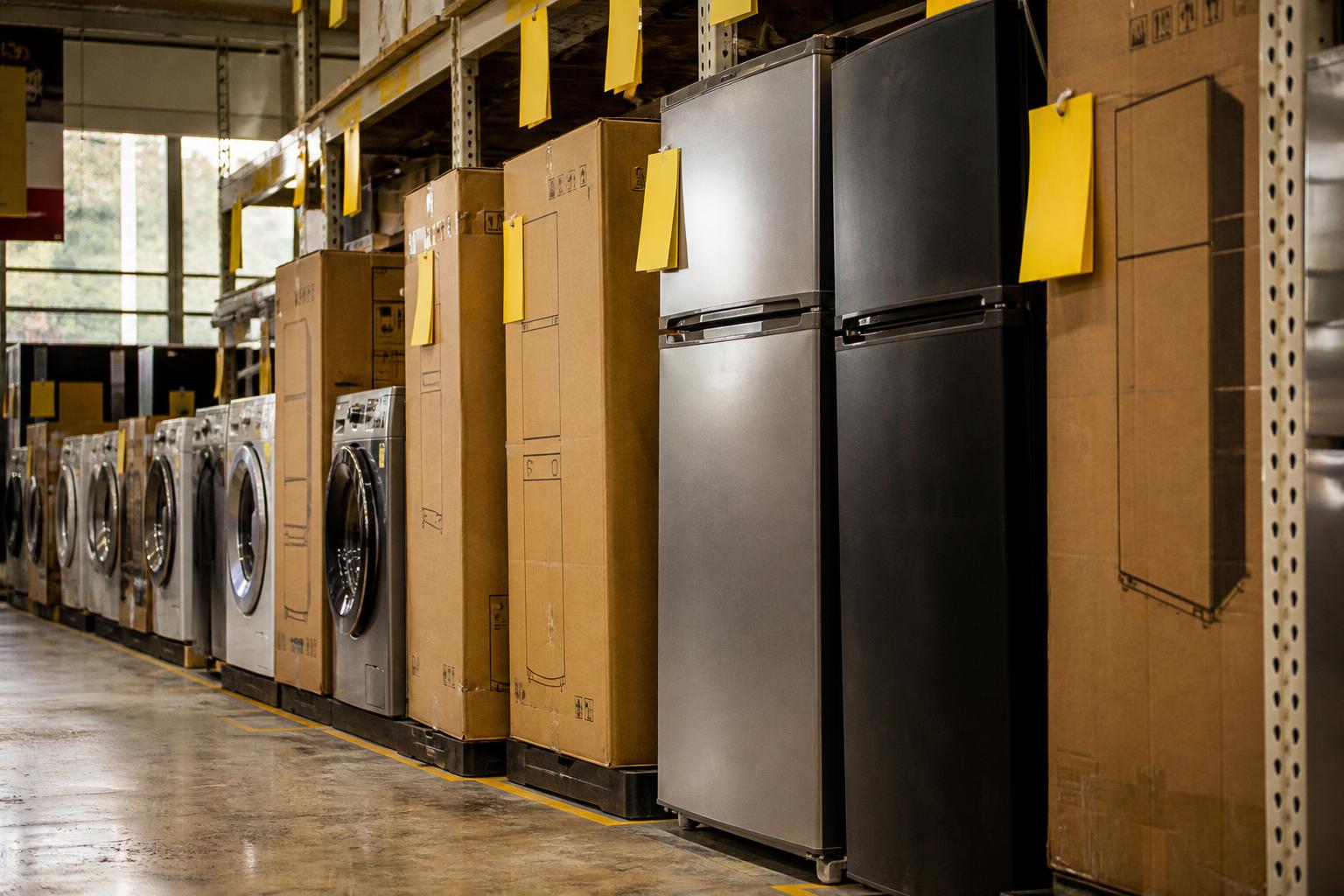
Quick answer: Where To Buy Appliances Cheap: shop scratch-and-dent appliance outlets, Best Buy Outlet, Lowe’s and Home Depot clearance sections, Costco sales, local Habitat for Humanity ReStores, Facebook Marketplace,.
And manufacturer refurbished stores.
Compare delivery, warranty, return policy, and installation costs before buying; the lowest sticker price may not be the cheapest total cost.
Where To Buy Appliances Cheap is a budgeting question first: Consumer Reports says major-appliance sale prices often drop 20% to 40% during holiday promotions, while the U.S. Bureau of Labor Statistics tracks appliance prices in its CPI “major appliances” category.
Cheap depends on total paid, not shelf price. A $900 appliance financed for 12 months at 29.99% APR costs about $1,049 before fees if interest applies. Compare cash, 0% promotional terms, delivery, haul-away, repairs, and warranty limits.
Prices often fall around Memorial Day, Labor Day, Black Friday, and model-year clearances; used or waiting can beat debt when the old unit still works. Check lender terms before acting.
What cheap appliances actually cost
Cheap appliances are not “cheap” in cash terms.
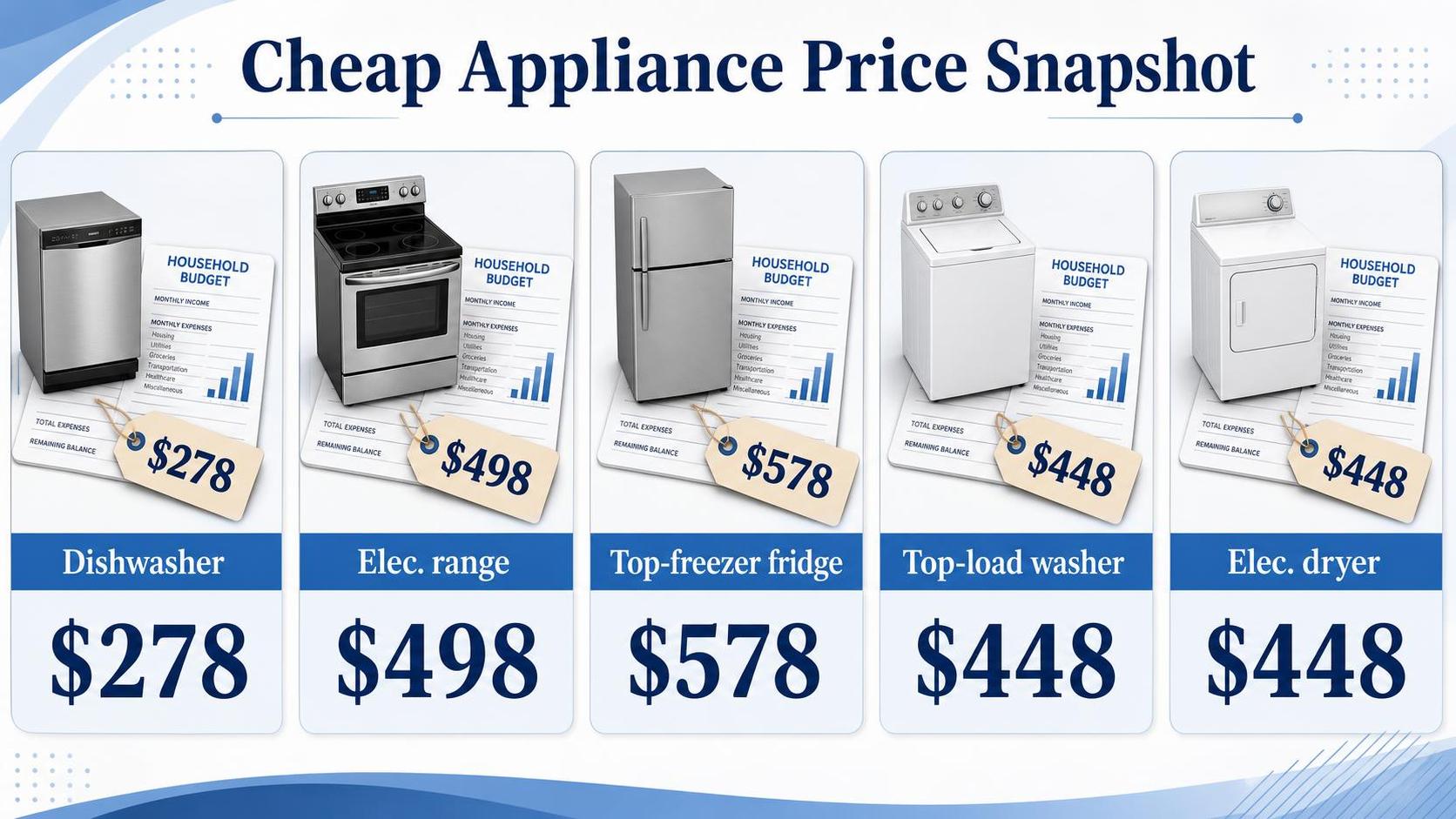
For a U.S. buyer, new entry-level major appliances commonly start around $278 to $578 before delivery, installation, haul-away, taxes, or any financing charges, based on national retailer listings.
That matters because the payment plan can add more to the bill than the sale price seems to suggest. Prices also move by ZIP code and date, so readers should verify current local totals before borrowing.
| Appliance | Observed low listed price | Source |
| Dishwasher | $278 | Home Depot listed price for a basic built-in dishwasher |
| Electric range | $498 | Home Depot listed price for a basic 30-inch electric range |
| Top-freezer refrigerator | $578 | Home Depot listed price for a basic top-freezer refrigerator |
| Top-load washer | $448 | Home Depot listed price for a basic top-load washing machine |
| Electric dryer | $448 | Home Depot listed price for a basic electric dryer |
Those figures are item prices, not out-the-door costs. Delivery, installation parts, and haul-away can push a “cheap” replacement several hundred dollars higher, and sales tax adds more.
Financing changes the math fast. Affirm says its APR ranges from 0% to 36%. The Home Depot Consumer Credit Card discloses a 29.99% APR for standard purchases. A high APR can erase the value of a sale.
| Amount financed | Term | APR | Total paid | Source |
| $1,500 | 12 months | 0% | $1,500 | No-interest plan if all terms are met |
| $1,500 | 12 months | 29.99% | About $1,757 | Calculated from Home Depot card APR |
| $1,500 | 12 months | 36% | About $1,806 | Calculated from Affirm maximum disclosed APR |
Consumer Reports says major-appliance discounts often show up around holiday weekends and in September and October, when new models tend to arrive. Waiting can be the better money move if the appliance still works safely.
Buying used can save cash when the need is temporary, but it raises failure and warranty risk.
A plain caution: do not rely on monthly-payment ads alone, and do not take on high-interest debt for a non-urgent replacement without checking the full repayment total.
Where appliance prices are usually lowest
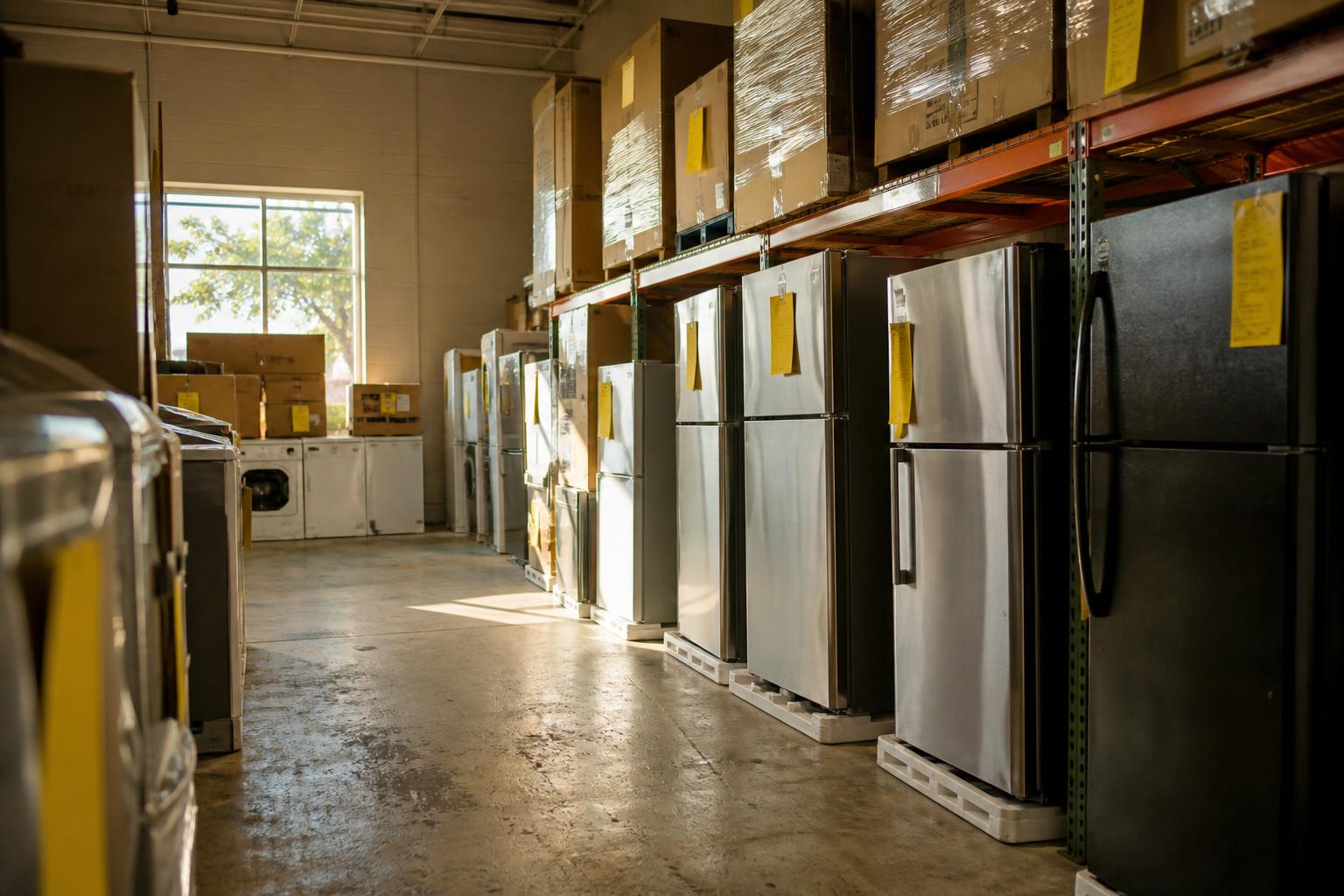
Appliance prices are usually lowest when retailers are clearing older inventory, not when a household needs a replacement fast.
Consumer Reports says major-appliance deals are most common around holiday weekends and in September and October, when new models often arrive and older stock gets marked down.
Cost matters more than the sale sign.
If a $1,000 appliance is financed for 12 months on a credit card at 22.80% APR, the average rate for accounts assessed interest in the Federal Reserve’s G.19 data for November 2024, the payment is about $93.91 a month and total paid is about $1,126.92.
| Timing or payment choice | What the source says | What it can mean in dollars |
| September-October | Consumer Reports says this is a common clearance window for major appliances as new models arrive. | Older inventory may be marked down, but the discount varies by model and store, so compare the final out-the-door price. |
| Memorial Day, July 4, Labor Day, Black Friday | Consumer Reports says these holiday periods are also common times for appliance promotions. | Useful for planned purchases. Less useful if a broken refrigerator forces a same-day replacement. |
| $1,000 purchase on a credit card | Federal Reserve G.19: 22.80% average APR on accounts assessed interest, November 2024. | About $93.91 monthly for 12 months; about $1,126.92 total paid. |
| $1,000 purchase on a 0% plan with a 3% fee | A promotional plan can still charge an upfront fee if the lender or card issuer sets one. | $30 fee means about $1,030 total paid if the balance is fully cleared before regular interest starts. |
The lowest-price window is usually the best time to buy only when the purchase is planned.
Waiting a few weeks for September, October, or a major holiday can be financially smarter than rushing, especially for washers, dryers, dishwashers, and ranges that are not emergency replacements.
Used can be the better money move when cash is tight and the appliance is simple to repair.
It is often less attractive for refrigerators or high-efficiency machines, where age, energy use, missing parts, and no warranty can erase the lower sticker price.
Caution: do not judge affordability by the monthly payment alone. A sale price can still become expensive debt once APR, deferred interest, delivery, haul-away, and installation charges are added.
Check the written terms from the retailer, card issuer, or lender before signing.
When appliance prices typically drop
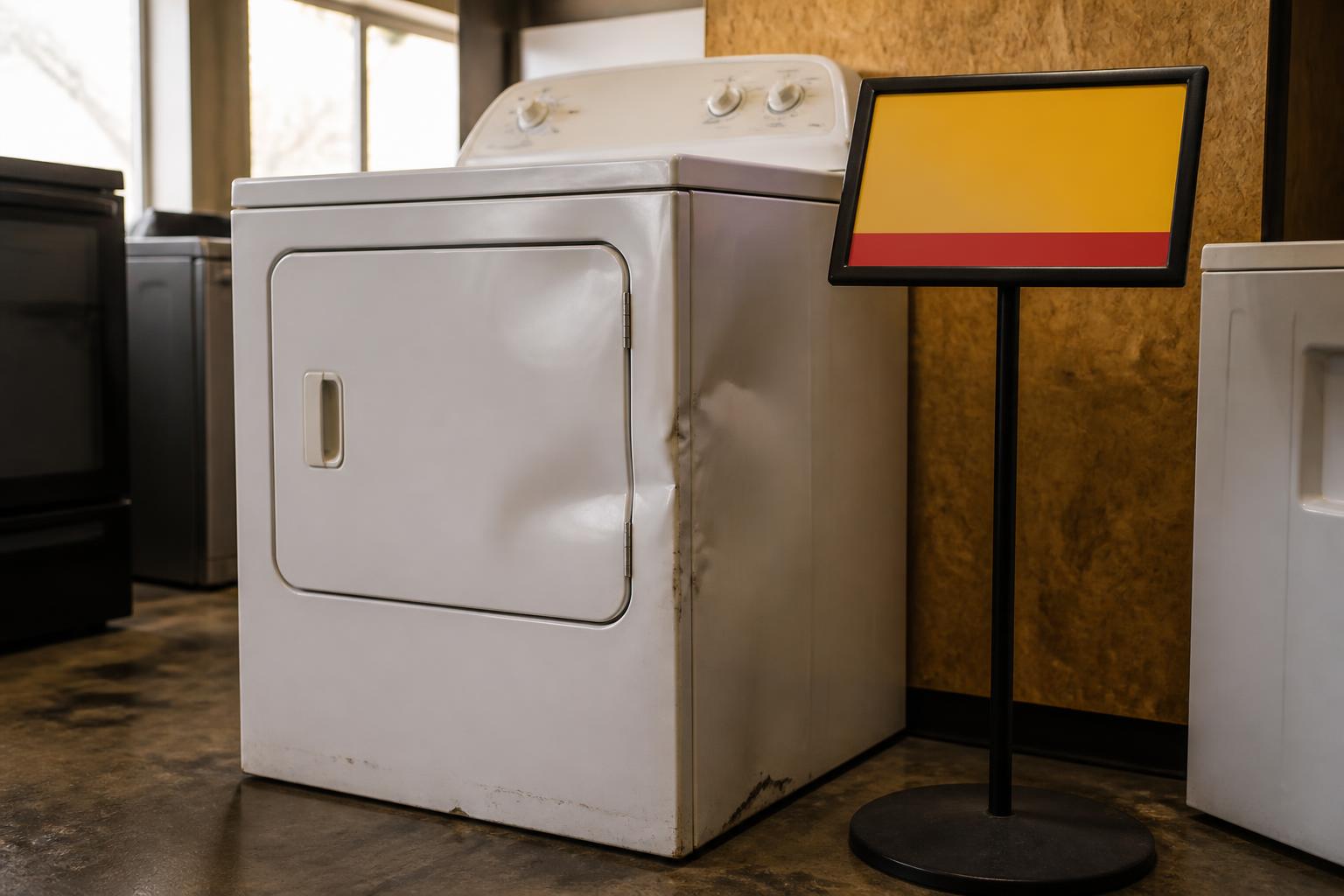
For a U.S. household trying to cut the total bill, the best timing usually comes in two windows: September to October and the late-November holiday period.
Consumer Reports says new appliance models often arrive in September and October, which can push retailers to clear older inventory, while the National Retail Federation said 200.4 million consumers shopped over Thanksgiving weekend in 2023.
A sign of how promotional that period becomes.
That does not mean every appliance is cheapest on the same day. Prices vary by category, stock levels, delivery demand, and whether installation, haul-away, and extended protection plans are bundled into the transaction.
| Time period | What usually happens | Why it can matter financially |
| September-October | Older models may be marked down as new lines arrive. | Consumer Reports says this is a common appliance model-change window, so clearance pricing is more likely on prior-year inventory. |
| Memorial Day period in May | Holiday promotions are common across big-ticket home categories. | Retailers use a major federal holiday to advertise appliance deals before summer moving and renovation season. |
| Labor Day period in September | Promotions often overlap with model-year turnover. | This can combine holiday discounting with clearance pressure on outgoing stock. |
| Black Friday-Cyber Monday in November | Heavy promotion and financing offers are common. | NRF said 200.4 million consumers shopped over the 2023 Thanksgiving weekend, so retailers compete hard for traffic. |
If the appliance still works, waiting for one of those windows can be the cheaper move than replacing it immediately.
A broken unit is different; an emergency purchase often removes the ability to compare total cost, negotiate delivery charges, or skip costly financing.
The September-October window matters most for buyers who are flexible about model year and finish. If the goal is function, not the newest feature set, an outgoing model can be the financially smarter purchase.
Late-November sales can be useful, but only if the full invoice is lower. A low sticker price can be offset by paid delivery, installation parts, haul-away fees, or deferred-interest financing that becomes expensive if not paid on time.
- Check the total before taxes, then add delivery, installation, haul-away, and any plan fees.
- Compare the same model number across dates, not just “similar” units.
- If the purchase is urgent, ask whether a floor model or discontinued model is available.
- Do not assume a holiday sale is the lowest annual price; confirm against the retailer’s recent price history if available.
Caution: sale timing is not a guarantee. If a household would need to borrow at a high APR to buy during a promotion, waiting, repairing, or buying a used unit may be the lower-cost financial decision.

How to budget before replacing appliances
Start with the replacement cost, not the monthly payment.
Consumer Reports says many new refrigerators sell in the $1,000 to $2,000 range, many dishwashers in the $400 to $1,000 range, and many full-size washing machines in the $650 to $1,500 range.
Those figures are broad market ranges, not guarantees.
Build the budget around the full bill: appliance, delivery, installation, haul-away, and any electrical or plumbing work. If the cash is not there, compare that shortfall against the real borrowing cost before replacing anything non-urgent.
| Appliance | Typical price range | Source |
| Refrigerator | $1,000 to $2,000 | Consumer Reports refrigerator buying guidance |
| Dishwasher | $400 to $1,000 | Consumer Reports dishwasher buying guidance |
| Washing machine | $650 to $1,500 | Consumer Reports washer buying guidance |
A practical budget rule is to save the replacement amount in a sinking fund over the remaining life of the appliance.
If a $1,200 refrigerator is likely to need replacement in 5 years, saving $20 a month reaches $1,200 in 60 months, before any interest earned.
If cash is short, financing can turn a needed purchase into an expensive one. The Federal Reserve reported the average interest rate on credit card plans was 21.47% in November 2024.
At that APR, a $1,200 purchase repaid over 12 months costs about $111.87 a month and about $1,342 total.
| How it is paid | Amount financed | APR or fee | Term | Total paid |
| Cash | $1,200 | $0 | Immediate | $1,200 |
| Credit card | $1,200 | 21.47% APR | 12 months | About $1,342 |
If the appliance still works, waiting can be the better financial move.
The National Retail Federation says major sales events cluster around Presidents Day, Memorial Day, Labor Day, and Black Friday, which is why many retailers discount home goods around those periods.
Used can also make sense for a secondary refrigerator or laundry pair, but inspect carefully. The caution is simple: do not take on high-interest debt for a convenience upgrade.
For a broken essential appliance, verify warranty terms, repair estimates, and financing disclosures before signing.
What appliance financing really costs
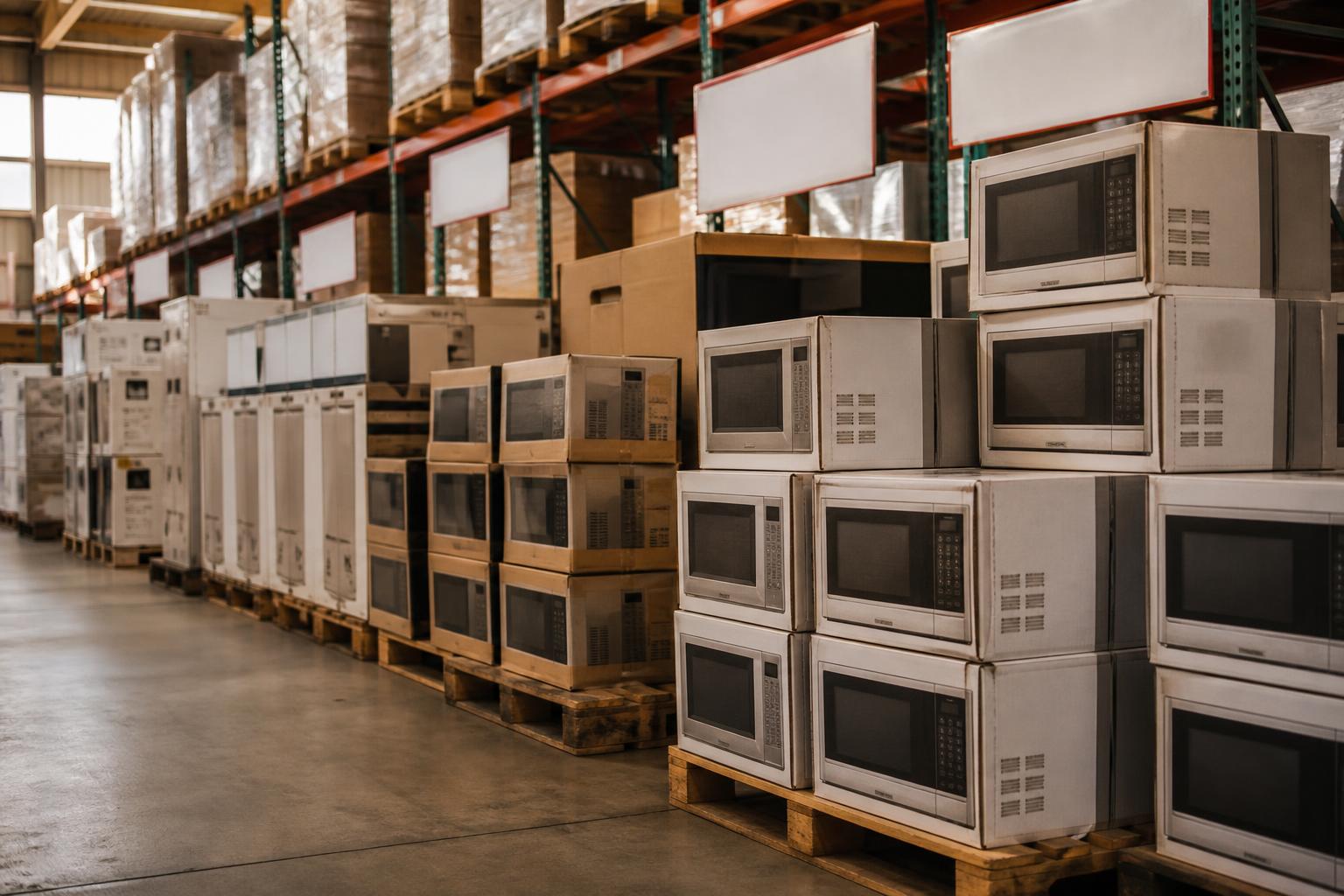
Appliance financing can cost nothing, or it can turn a $1,200 purchase into roughly $1,446 or more. The key variables are the APR, whether interest is deferred, and whether fees apply if a payment is late.
Real terms vary widely. Affirm says its APR ranges from 0% to 36% and that it charges no late or hidden fees. The Home Depot Consumer Credit Card discloses a 29.99% variable APR and a 6-month deferred-interest offer on purchases of $299 or more.
Lowe’s Advantage Card discloses a 31.99% variable APR with a similar deferred-interest structure.
| Financing type | Source figure | Example on $1,200 purchase | Total paid |
| Installment loan | Affirm: 0% to 36% APR, no late or hidden fees | 12 months at 0% APR = $100 per month | $1,200 |
| Installment loan | Affirm: up to 36% APR | 12 months at 36% APR = about $120.46 per month | About $1,445.52 |
| Store card, deferred interest | Home Depot card: 29.99% variable APR, 6 months deferred interest on $299+ | Paying about $183.33 for 6 months leaves a small balance; deferred interest can still be added | About $1,320.50 in this example |
| Store card, deferred interest | Lowe’s card: 31.99% variable APR, 6 months deferred interest on $299+ | Similar payoff pattern raises the back-charged interest further | Higher than the 29.99% example |
The most dangerous offer is deferred interest. If the balance is not paid in full by the promo deadline, interest is usually charged from the purchase date, not from the end of the promotion.
The Consumer Financial Protection Bureau has warned that this structure can surprise borrowers and raise costs sharply.
That changes the budgeting decision. A true 0% plan with no fees can spread cash flow without increasing the price. A 36% APR plan adds about $245.52 on a $1,200 purchase over one year. That extra cost could cover part of an emergency fund instead.
Caution: do not rely on the monthly payment alone. Check the APR, promo deadline, late-fee policy, and total of payments in the lender’s disclosure before signing.
If the appliance is not urgent, waiting and paying cash is usually the lower-risk financial move.
- Source: Affirm terms page for 0% to 36% APR and no late or hidden fees.
- Source: The Home Depot Consumer Credit Card pricing and terms for 29.99% variable APR and 6-month deferred interest on $299+.
- Source: Lowe’s Advantage Card pricing and terms for 31.99% variable APR and 6-month deferred interest on $299+.
- Source: Consumer Financial Protection Bureau guidance on deferred-interest promotions.
When used appliances make financial sense
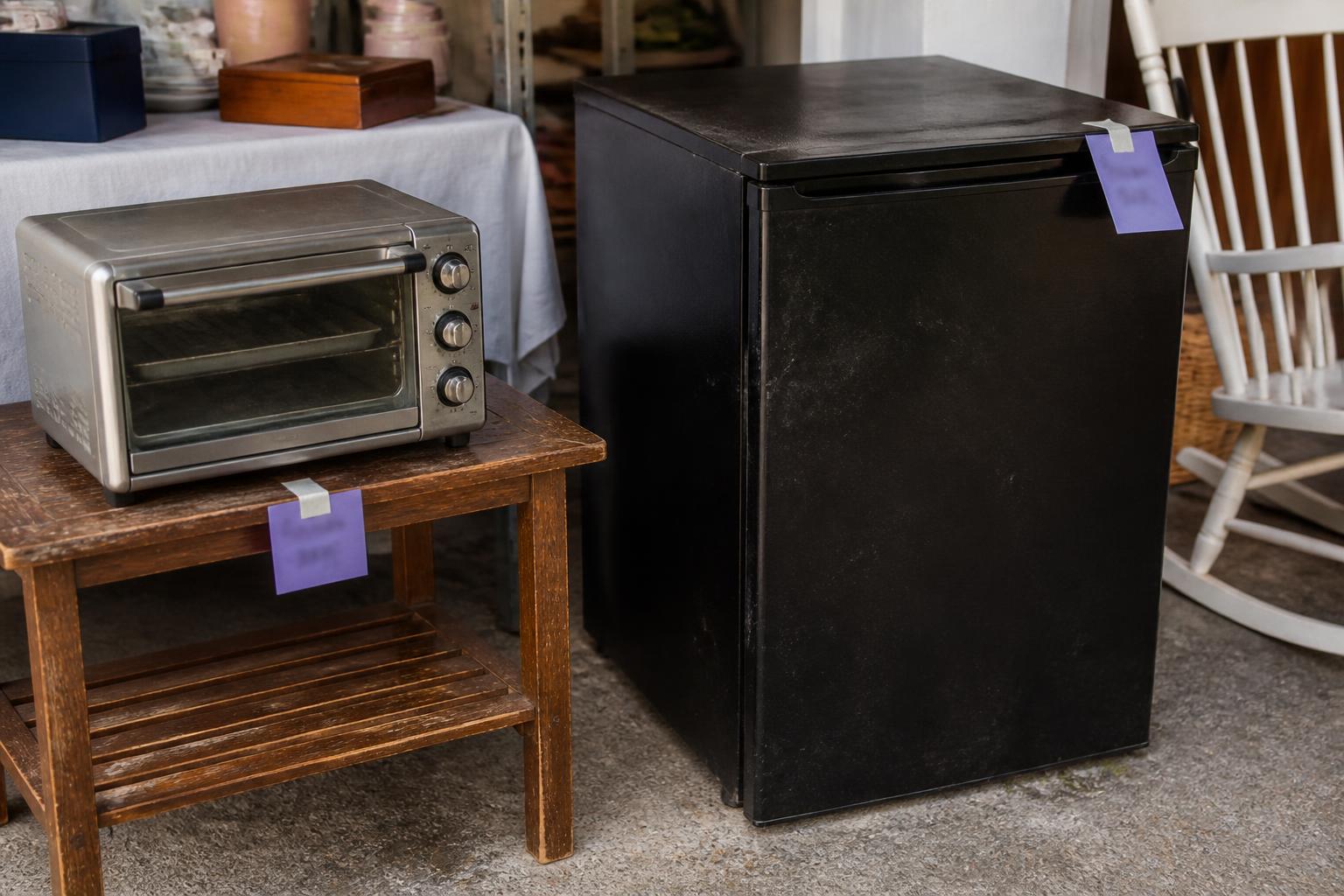
Used appliances make financial sense when the cash price is low enough that even a likely repair keeps the total well below replacement cost.
The key test is simple: add the purchase price, delivery, parts, and a realistic repair reserve before deciding.
Real costs matter. Angi says refrigerator repairs typically run $200 to $330, and washing machine repairs typically run $125 to $450.
Energy Star says replacing a refrigerator made before 1993 with a new Energy Star certified model can save more than $270 over five years, so very old used fridges can be false bargains.
| Fact | Figure | Source |
| Typical refrigerator repair | $200 to $330 | Angi refrigerator repair cost guide |
| Typical washing machine repair | $125 to $450 | Angi washing machine repair cost guide |
| Possible savings from replacing a pre-1993 refrigerator | More than $270 over 5 years | Energy Star |
| Expected life of a standard refrigerator | About 13 years | National Association of Home Builders, Study of Life Expectancy of Home Components |
| Expected life of a clothes washer | About 10 years | National Association of Home Builders, Study of Life Expectancy of Home Components |
That means used usually works best for simpler machines with fewer expensive electronics, especially if the appliance is still well inside its normal life span.
A six-year-old washer may leave more usable years than a 12-year-old refrigerator, even if both look clean.
Used is often the stronger money move in four cases:
- If paying cash for used avoids revolving credit card debt. The Federal Reserve reported the average credit card interest rate on accounts assessed interest was 22.80% in February 2024.
- If the appliance is temporary, such as a rental, first home, or short-term bridge after a move.
- If a seller can document age, model number, and a recent repair or inspection.
- If the model is not energy-hungry or near end of life.
Used often does not make sense for old refrigerators, freezers, and dishwashers with uncertain repair history. A cheap purchase can turn expensive after one service call and higher utility use.
Caution: Do not rely on appearance alone. Check the serial number, age, return policy, and local utility costs, and ask for a live test before paying.
If the seller cannot verify basic information, waiting and saving cash is usually the safer financial choice.
What Coin Abul independently reviewed
Major appliances are a four-figure money decision, not a minor errand.
The U.S. Bureau of Labor Statistics said the average consumer unit spent $434 on major household appliances in 2023, while the National Association of Home Builders estimated a new-appliance budget of $3,800 for a typical single-family home in 2024.
Those figures answer the cost question first: replacing one machine may be a few hundred dollars, but replacing several can strain a monthly budget fast.
Readers should verify current prices with the seller and financing terms in the written agreement before signing.
| Cost fact reviewed | Figure | Source |
| Average annual household spending on major appliances | $434 in 2023 | U.S. Bureau of Labor Statistics, Consumer Expenditure Survey |
| Typical new-appliance allowance in a new single-family home | $3,800 in 2024 | National Association of Home Builders, “Cost of Constructing a Home” |
| Average APR on credit card accounts assessed interest | 22.80% in Q4 2024 | Federal Reserve, G.19 Consumer Credit |
| Typical BNPL late fee cap | Up to $8 per missed payment | Consumer Financial Protection Bureau summary of common BNPL terms |
Budgeting matters more than the sticker. A household replacing a $1,000 refrigerator with cash pays $1,000.
Put that same $1,000 on a card at the Federal Reserve’s 22.80% average APR and repay it over 12 equal months, and the total paid is about $1,129.
| $1,000 appliance financing example | Monthly payment | Total paid | Source basis |
| Cash | Not applicable | $1,000 | No financing cost |
| 12 months at 22.80% APR | About $94 | About $1,129 | APR based on Federal Reserve Q4 2024 average; payment math from standard amortization |
| “Pay in 4” with no interest, no late fee | $250 | $1,000 | Total stays at purchase price if every payment is on time |
| “Pay in 4” with one $8 late fee | $250 plus fee | $1,008 | CFPB summary of common BNPL late-fee caps |
Timing can cut the bill. Consumer Reports says appliance discounts often cluster around Memorial Day, Labor Day, Black Friday, and when new models arrive in September and October.
Waiting can be the better money move if the current unit still works and debt would carry a double-digit APR.
Used can also be financially smarter for a backup freezer, washer, or basic range, but only if the price gap is large enough to offset a shorter remaining life and no warranty.
If replacing the appliance would force credit-card debt that cannot be cleared within a year, the financing cost can erase the “sale” entirely.
Frequently Asked Questions
When is the cheapest time to buy appliances?
Holiday promotions and model-change periods are often the cheapest times.
Consumer Reports says major appliances are commonly discounted around Memorial Day, Labor Day, Black Friday, and year-end clearances, while new refrigerator ranges often arrive in spring and new laundry models in fall.
Which can push older inventory onto sale.
Prices change by retailer, so check the current ad and the manufacturer model year before buying.
Are scratch-and-dent appliances worth buying?
They can be one of the cheapest legitimate options because cosmetic damage often lowers the price without affecting function.
Best Buy Outlet and Lowe’s Outlet both sell open-box and scratch-and-dent appliances, but buyers should inspect the unit, confirm the warranty in writing, and make sure all parts are included before paying.
Do not assume a full manufacturer warranty applies unless the seller states it clearly.
Should buyers compare warehouse clubs, big-box stores, and independent dealers?
Yes. J.D. Power’s U.S. Appliance Satisfaction Study has found differences in satisfaction across retailer types, and independent dealers sometimes compete with big chains by bundling delivery, haul-away, or installation rather than cutting the sticker price.
Compare the full out-the-door cost, because a cheaper appliance can become more expensive after fees.
Is it cheaper to buy appliance bundles?
Often, but not always. Home Depot, Lowe’s, and Best Buy frequently run kitchen package promotions with multi-item discounts, yet the real savings depend on whether the included models match the features and sizes needed.
Check each item’s standalone sale price and the total after delivery and installation, because bundles can hide higher pricing on one piece.
Can buying an energy-efficient appliance save money even if the price is higher?
Sometimes. The U.S. Department of Energy says ENERGY STAR certified appliances are designed to use less energy than standard models, and ENERGY STAR provides product-specific savings estimates that vary by appliance type and household use.
Buyers should compare the purchase price, expected utility cost, and any local rebate before deciding, because savings are not the same in every home.
Is buying a used appliance from Facebook Marketplace or Craigslist safe?
It can be cheaper upfront, but it carries more risk than buying from a retailer.
The Federal Trade Commission advises consumers to watch for misrepresentation and payment scams in peer-to-peer marketplaces, and used appliances may have no warranty, hidden defects, or recall issues.
Test the appliance if possible and check the model number against the U.S. Consumer Product Safety Commission recall database before handing over money.
Related Reading
- When Do Kitchen Appliances Go On Sale?
- Health Insurance Liens on Personal Injury Settlements
- Price Of Apartment In Manhattan
- What Price Apartment Can I Afford?
- How Much Does A Warehouse Cost?
- All Blog Guides
- U.S. Department of Energy: Energy Saver – Shopping for Appliances (n.d.)
- ENERGY STAR: Products (n.d.)
- Consumer Reports: How to Save Money on Large Appliances (2024)
- U.S. Environmental Protection Agency: WaterSense Labeled Products (n.d.)
- Purdue University Extension: Energy Efficiency and Saving Money with Appliances (n.d.)