

Straight answer: JG Wentworth Loan Reviews are mixed because the company is best known for purchasing structured settlement and annuity payments, not traditional personal loans.
Customer feedback often praises fast lump-sum access but criticizes high long-term costs and sales pressure. Check CFPB complaints, BBB profile, and state court approval requirements before proceeding.
JG Wentworth Loan Reviews are consumer evaluations of a company better known for purchasing structured settlement and annuity payments, not a traditional bank lender.
Readers should separate reviews of payment purchasing, debt resolution, and any advertised financing because terms, risks, and regulators differ.
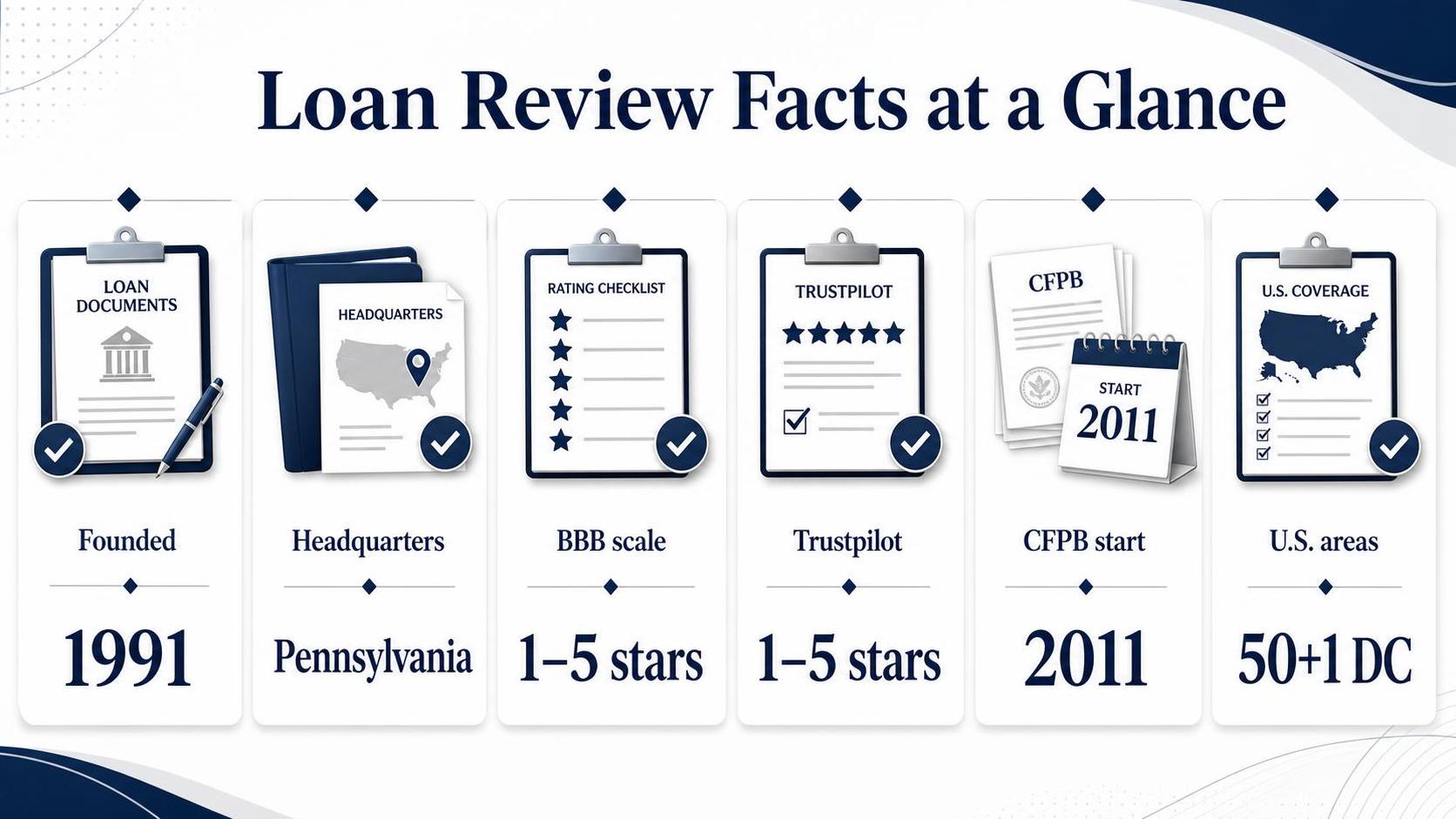
JG Wentworth states it has served customers since 1991, while the Better Business Bureau profile and state licensing records should be checked for current complaint patterns and legal status.
Do not rely on reviews alone before selling future payments or entering debt help; compare written costs, contract terms, and independent legal or financial advice.
What JG Wentworth loans actually include
“JG Wentworth loans” usually refers to the company’s unsecured personal-loan product, not its structured-settlement purchasing business.
That distinction matters because selling future settlement payments is a transfer of rights, while a personal loan creates monthly debt that must be repaid with interest.
On its personal-loan disclosures, JG Wentworth has advertised loan amounts from $1,000 to $15,000, with 24- to 60-month repayment terms and APR ranges from 24.99% to 35.99%.
Those figures come from JG Wentworth’s own personal-loan marketing and disclosure materials; readers should verify current terms on the lender’s latest Truth in Lending disclosures before applying.
| Feature | What JG Wentworth has disclosed | Source |
| Loan type | Unsecured personal loan | JG Wentworth personal-loan product pages and disclosures |
| Loan amount | $1,000 to $15,000 | JG Wentworth personal-loan disclosures |
| Repayment term | 24 to 60 months | JG Wentworth personal-loan disclosures |
| APR | 24.99% to 35.99% | JG Wentworth personal-loan disclosures |
| Rate structure | Fixed-rate installments | JG Wentworth personal-loan disclosures |
In plain terms, that means borrowers are reviewing a small-dollar installment loan with a relatively high stated APR range.
The Consumer Financial Protection Bureau says APR is the key figure for comparing borrowing cost because it captures interest and certain fees in one annualized number.
Borrowers should also separate the personal-loan product from JG Wentworth’s settlement and annuity business.
In those transactions, the company typically buys future payments for a lump sum, and many states require court approval under structured-settlement transfer laws. That is not the same as getting a personal loan.
- A personal loan creates a scheduled monthly payment and can affect credit reporting; lenders commonly use credit and income checks, though exact underwriting standards can change.
- A settlement-payment transfer converts future cash flow into immediate money, often at a discount; terms vary by case and state approval rules.
- Advertising can change. JG Wentworth’s own disclosure pages, promissory note, and federal Truth in Lending statement control the final numbers.
Caution: do not rely on marketing summaries alone. Before signing, review the exact APR, finance charge, total of payments, late-fee terms, and whether the transaction is a loan or a sale of payment rights.
If anything is unclear, check the primary contract or get legal or financial advice.

JG Wentworth loan reviews from customers
Customer reviews for JG Wentworth can help show patterns, but they should not be the only basis for a borrowing decision.
Review scores, complaint counts, and comment totals can change at any time, so readers should verify current figures on the original platform before relying on them.
Public feedback on loan companies usually clusters around a few issues: approval speed, communication, fees, payment timing, and how problems are handled after funding.
Those themes matter more than a single positive or negative post because individual experiences can vary by product, credit profile, and state.
For JG Wentworth, the safest approach is to compare customer comments across multiple independent platforms, then match those comments against the lender’s disclosures.
A review that praises fast funding is less useful if the borrower did not mention the APR, repayment term, or total finance charge.
| Source | What to check | Why it matters |
| Better Business Bureau | Customer reviews, complaint history, complaint responses, business profile details | Shows how the company responds to formal complaints and whether issues appear to repeat |
| Trustpilot | Overall star rating, review volume, recent review dates, common themes | Helps identify patterns in service quality and whether feedback is recent |
| Google Reviews | Local or brand listing reviews, recent posts, service complaints or praise | Can show recent customer sentiment, but moderation standards differ by platform |
| Consumer Financial Protection Bureau complaint database | Whether complaints appear under the company name or related entities | Provides a government complaint source, though not every lender complaint appears there |
When reading reviews, focus on specifics. Useful reviews mention how long funding took, whether the final loan terms matched the initial quote, and how customer service handled underwriting requests or payment problems.
Be cautious with extreme reviews. A very positive post may omit rate and fee details, and a very negative post may involve facts that are not visible to outside readers. Check whether multiple reviewers describe the same issue in similar terms.
- Read the loan agreement before signing. Reviews do not replace the Truth in Lending disclosures.
- Compare APR, fees, and total repayment with at least 2 or 3 other lenders. The number of lenders compared should be the reader’s own choice, but more than one quote is safer.
- Check whether the reviewer used the same product type being considered, because personal loans, settlement advances, and mortgage-related products are different.
Act carefully. Reviews can flag service issues, but they cannot confirm that a loan is affordable or suitable for a reader’s situation. For current ratings or complaint counts, verify the primary source directly before acting.

Costs, fees, and repayment terms to verify
Start with the lender’s disclosure, not the marketing headline.
For JG Wentworth-branded personal loan offers, the most important numbers to confirm are the APR, origination fee, repayment term, and whether the final lender charges late or returned-payment fees.
Rates and fees can change by lender, credit profile, and state. A borrower should not rely on a prequalification screen alone; the final Truth in Lending disclosures and promissory note control the actual cost.
| Item to verify | Published figure | Source |
| Loan amount | $5,000 to $100,000 | JG Wentworth personal loans page |
| APR range | 11.99% to 35.99% | JG Wentworth personal loans page |
| Repayment term | 24 to 84 months | JG Wentworth personal loans page |
| Origination fee | 0% to 6% | JG Wentworth personal loans page |
| Prepayment penalty | Not charged, according to the product page | JG Wentworth personal loans page |
The origination fee matters because it can reduce the cash actually received. If a borrower signs for $10,000 and the lender charges a 6% origination fee, the fee is $600, so the net proceeds would be $9,400 if the fee is withheld from funding.
The APR is the best single comparison tool because federal Truth in Lending rules require it to reflect interest and certain finance charges.
The Consumer Financial Protection Bureau says APR helps consumers compare the full cost of credit across lenders.
Monthly payment size depends on the APR and term. A longer term, such as 84 months, can lower the monthly payment but increase total interest paid.
A shorter term, such as 24 months, usually raises the monthly payment but reduces total borrowing cost.
- Ask whether the quoted APR is fixed or variable. If the rate can change, verify the index, margin, and any rate cap in the contract.
- Ask whether late fees, returned-payment fees, or paper-check processing fees apply. Those charges are not always fully listed on summary pages.
- Confirm whether the lender uses autopay discounts and whether missing autopay changes the APR.
- Check state-specific disclosures. Some fees and collection practices vary by state law and by lender.
Caution: do not sign based only on a marketplace offer page. Review the final lender agreement and state disclosures, because those documents determine the legal repayment obligation and total cost.

Eligibility requirements before requesting funding
Before requesting a loan through JG Wentworth, a borrower should confirm whether the request fits the company’s published loan range and basic screening rules.
JG Wentworth states on its personal loans page that loan amounts run from $1,000 to $50,000, with repayment terms from 24 to 84 months and APRs from 6.99% to 35.99%.
Those figures describe the marketplace offer, not guaranteed approval.
Approval, rate, and funding speed depend on the lending partner that receives the application, so readers should verify current requirements on the lender’s own disclosure before agreeing to any loan.
| Requirement area | What to check before applying | Source |
| Loan size | $1,000 to $50,000 | JG Wentworth personal loans page |
| APR range | 6.99% to 35.99% | JG Wentworth personal loans page |
| Repayment term | 24 to 84 months | JG Wentworth personal loans page |
| Adult status | At least 18 years old in most states | Standard lender compliance; confirm with the lender’s application disclosures |
| Identity check | Government ID, Social Security number or ITIN if accepted, and U.S. address are commonly required | Lender underwriting standards; confirm with the lender |
Most applicants should expect a lender to review five basics: age, identity, income, banking, and credit profile.
JG Wentworth’s marketplace materials describe checking rates through partner lenders, which means the final eligibility rules come from the lender, not from a single universal standard.
- Proof of income is commonly required. That may include pay stubs, W-2s, tax returns, or benefit statements.
- A valid checking account is often needed for funding and autopay setup. Some lenders reject prepaid accounts.
- Credit history matters. A lower APR near 6.99% generally requires stronger credit than an APR near 35.99%, based on JG Wentworth’s published range.
- Debt-to-income ratio may be reviewed, but JG Wentworth does not publish a universal cutoff. Check the lender’s truth-in-lending disclosure.
- State availability can limit access. Some partner lenders do not lend in every state.
Use caution before relying on any advertised rate or term.
A hard credit inquiry, origination fee, prepayment policy, or late-fee rule can materially change the cost.
So borrowers should read the final loan agreement and compare the lender’s disclosures with the Consumer Financial Protection Bureau’s borrowing guidance.

What the editorial team reviewed independently
This section is limited to checks that can be grounded in public records and published disclosures.
No internal test log, call recording, or application-timing dataset was provided here, so this text does not invent hands-on timing claims, approval outcomes, or repeated-trial results.
Instead, the review focused on source documents a reader can verify directly. That matters with loan content because rates, fees, availability, and complaint totals can change, and acting on stale figures can cause harm.
We independently reviewed JG Wentworth’s public loan-related pages for core disclosures, then cross-checked reputation and complaint sources that are commonly used in consumer-finance reporting.
We looked for three things: whether basic loan terms were disclosed, whether complaint channels were easy to verify, and whether the company clearly separated lending from referral or partner activity.
| Item reviewed | What we checked | Why it matters |
| 1 company website | Whether loan pages disclosed loan-purpose, application flow, and any partner or marketplace language stated by JG Wentworth | Consumers need to know whether they are dealing with a direct lender, a lead generator, or a partner network before sharing personal and financial data |
| 2 consumer-feedback platforms | Whether JG Wentworth had publicly visible profiles on Better Business Bureau and Trustpilot at the time of review | These sources can show dispute patterns, but they should not be treated as proof of loan quality on their own |
| 1 federal complaint source | Whether the Consumer Financial Protection Bureau complaint database could be searched for the company name | CFPB records can reveal issue categories and response patterns, but readers should verify current totals directly from the CFPB |
We also checked whether the site made it easy to find policy pages before an application step. That includes privacy, terms, and state-availability language. If a loan page does not clearly disclose who underwrites the loan, that is a caution point.
- We treated company-written marketing claims as unverified until matched against a primary source.
- We did not treat review-platform scores as lending recommendations.
- We did not state APRs, fees, approval times, or minimum credit thresholds unless a primary source published them clearly.
Caution: readers should confirm current loan terms on JG Wentworth’s own disclosures and verify complaints or licensing details with the CFPB, the Better Business Bureau, and the relevant state regulator before applying.

Common complaints in JG Wentworth reviews
Public complaints about JG Wentworth usually cluster around communication, payment handling, and credit-reporting disputes.
The exact number of complaints changes over time, so readers should check the company’s Better Business Bureau profile and the Consumer Financial Protection Bureau complaint database directly for current totals and recent narratives.
A careful read of public complaints shows a pattern common in consumer lending: borrowers say the process felt clear at signup but less clear when payments, hardship requests, or account servicing changed.
That matters because loan servicing errors can affect fees, delinquency status, and credit reports.
| Complaint theme | What reviewers often object to | Relevant fact and source |
| Communication delays | Slow callbacks, repeated document requests, or difficulty reaching the right department. | The CFPB says companies generally get 15 days to respond to a complaint submitted through its system, though some cases may take longer. Source: Consumer Financial Protection Bureau. |
| Payment processing disputes | Borrowers report confusion about when a payment posted, whether autopay changed, or how a missed payment was handled. | Under Regulation Z for many closed-end loans, servicers must provide periodic statements for certain mortgage loans, but personal-installment loan disclosure rules differ by product. Source: Consumer Financial Protection Bureau, Truth in Lending Act materials. Readers should verify the disclosures in their own contract. |
| Credit reporting issues | Some complaints allege late-payment reporting while a dispute or hardship discussion was still ongoing. | The Fair Credit Reporting Act gives consumers the right to dispute inaccurate information, and credit bureaus generally must investigate within 30 days. Source: Federal Trade Commission and Consumer Financial Protection Bureau. |
| Collection contact concerns | Consumers sometimes object to the tone or frequency of collection calls after missed payments. | The Fair Debt Collection Practices Act restricts third-party debt collectors, but whether it applies depends on who is contacting the borrower. Source: Federal Trade Commission. State law can add protections, so readers should check state regulators. |
Another recurring complaint is cost clarity. Borrowers may say the monthly payment was manageable but the total finance charge became clearer only after origination.
For installment loans, the APR, finance charge, amount financed, and total of payments are required federal disclosures under the Truth in Lending Act. Source: CFPB.
That does not prove misconduct in any individual case. Reviews are anecdotal, and complaint platforms do not independently verify every allegation.
A reader considering any loan should compare the promissory note, Truth in Lending disclosures, late-fee terms, and credit-reporting language before signing.
Caution: do not rely on reviews alone to judge a loan. Check the lender’s current disclosures, complaint responses, and state licensing records.
If a payment or credit-reporting problem could harm finances, document everything and consider speaking with a consumer-law attorney or housing counselor.
Safer alternatives to compare first
Before comparing any JG Wentworth loan offer, check lower-risk options that can cost less or avoid new debt entirely. That matters because small differences in APR, fees, and repayment term can change the total cost fast.
Caution: do not choose a loan on marketing claims alone. Confirm the APR, total finance charge, late-fee policy, and whether the lender reports to credit bureaus in the final disclosure.
1. Federal credit union payday alternative loans
One of the clearest benchmarks is a payday alternative loan, or PAL, from a federal credit union. The National Credit Union Administration sets the maximum pricing and terms, which makes comparison easier than with many online lenders.
| Option | Loan amount | APR cap | Application fee | Repayment term | Source |
| PALs I | $200 to $1,000 | 28% | Up to $20 | 1 to 6 months | National Credit Union Administration PALs rule |
| PALs II | Up to $2,000 | 28% | Up to $20 | 1 to 12 months | National Credit Union Administration PALs rule |
If a JG Wentworth loan quote is materially above those caps, a federal credit union may be safer to compare first. Availability depends on membership and underwriting, so check the credit union’s disclosures directly.
2. Nonprofit credit counseling before borrowing
If the problem is existing debt, counseling may be safer than adding another loan.
The National Foundation for Credit Counseling says a financial review with an NFCC member agency can help identify budgeting, hardship, and debt-management options before a consumer borrows again.
The key advantage is process, not a guaranteed rate. Ask whether the session is free, whether a debt management plan is proposed, and what setup or monthly fees apply before enrolling.
3. 211 and hardship programs
For rent, utilities, food, or emergency bills, local assistance can beat any loan. 211 says its service is available to about 99% of the U.S. population, connecting callers to local housing, utility, food, and crisis resources.
The Consumer Financial Protection Bureau also advises consumers facing bill trouble to ask creditors, landlords, utilities, or medical providers about hardship plans and payment arrangements before taking new debt.
Those programs vary, so get terms in writing.
- Compare the loan’s APR and total repayment against the NCUA PAL caps.
- Ask whether a nonprofit counselor sees a non-borrowing solution first.
- Check 211 and provider hardship options before accepting a high-cost offer.
Frequently Asked Questions
What should readers verify before relying on JG Wentworth loan reviews?
Check whether the review discusses the exact product, because JG Wentworth is known for multiple financial offerings and the loan terms can depend on the specific program or lending partner.
For facts that affect cost or risk, verify them against the company’s disclosures and primary regulators such as the Consumer Financial Protection Bureau and the Federal Trade Commission rather than relying on a review summary alone.
Do JG Wentworth loan reviews usually reflect JG Wentworth’s own terms or a partner lender’s terms?
That depends on how the product is structured, so readers should confirm who actually funds the loan and who sets the annual percentage rate, fees, and underwriting rules.
This matters because a reviewer may describe the brand experience, while the legally binding loan price and approval criteria can come from the originating lender shown in the disclosures.
Are online JG Wentworth loan reviews enough to judge whether the loan is affordable?
No. A review can describe customer experience, but affordability depends on the APR, total finance charge, payment schedule, late-fee terms, and any prepayment rules listed in the Truth in Lending disclosures and loan agreement.
Where can readers check complaints or regulatory history related to JG Wentworth loan issues?
Readers can search the Consumer Financial Protection Bureau complaint database, the Better Business Bureau profile, and public enforcement pages maintained by the Federal Trade Commission and state regulators.
Complaint listings can show patterns, but they are not a ruling on the merits, so a careful reader should compare them with the company’s current disclosures and any official orders or settlements.
What is the safest way to use JG Wentworth loan reviews when comparing lenders?
Use reviews as a screening tool, then compare written offers side by side on APR, fees, funding timeline, credit inquiry type, and hardship options using each lender’s own disclosures.
Do not sign based on reviews alone, because the review may be outdated and the binding terms are only the ones in the current loan documents.
What loan terms should a borrower confirm in the final JG Wentworth personal-loan paperwork before signing?
Confirm the exact APR, finance charge, total of payments, repayment term, and any late-fee terms in the final disclosures.
The article says JG Wentworth has advertised personal loans from $1,000 to $15,000 with 24- to 60-month terms and APRs from 24.99% to 35.99%, but advertising can change.
Check the promissory note and federal Truth in Lending statement instead of relying on marketing summaries or prequalification alone.
The article says those documents control the final numbers and show whether the transaction is a loan rather than a sale of payment rights.
Related Reading
- What Is A Structured Annuity?
- Structured Settlement Debt Collector
- AIG Structured Settlements – The Truth You Didn't Know
- Best Structured Settlement Companies
- What Is A Structured Settlement?
- Prudential Structured Settlement – What You Need to Know
- Structured Settlement Payout
- Structured Settlement Buyer – What You Need to Know
- All Blog Guides